
Friday, 23 May 2014

Thursday, 15 May 2014
Sunday, May 4, 2014
Duck shooter shot in the buttocks

Duck shooter shot in the buttocks
A duck shooter is nursing minor gunshot wounds to his backside and leg inflicted while hunting with friends.
Queenstown Police acting sergeant Feleki Uhrle said the man was with three friends at Paradise Valley in Glenorchy yesterday when the incident happened.
"He claims some pellets ricocheted off something and hit him."
St John Ambulance spokesman Ian Henderson said they were alerted at 6.05pm to the incident, and an ambulance was sent to the Glenorchy Hotel.
"I don't know if this is where the incident had happened or not, however this is where the patient was located."
The man, in his 40s, had minor wounds, he said.
"From what I can tell, the incident had happened earlier in the day however an ambulance wasn't called until some time later. The patient was assessed at the scene, but we didn't transport him anywhere as his injuries were minor."
Queenstown police are investigating the incident.
From http://www.stuff.co.nz/national/10007663/Duck-shooter-shot-in-the-buttocks
Wednesday, 14 May 2014
SLC - Questions
These are the people in the class that have not done the Student Led Conference yet. These are their questions to the people that have...

SLC - Our thoughts
Our school has been doing Student Led Conferences (SLCs). These are our thoughts after our very first time doing them:
Sunday, 11 May 2014
Monday, 5 May 2014
Blogging in Term 2
Our Class Blogs
We have discussed how to take the next steps with out class blogs - how to make them more interesting, put more posts on and get people reading them. Here is the thinking from our class discussion...
Why do we have blogs?
- To share our learning
- To show people what we have improved on and see where we are at
- To show the skills we are learning
- To show the topic we are learning
- To get feedback about your learning
How should we be using our blogs?
- Think about what you post. Is it appropriate?
- Keep personal details off it.
- Don’t put too many gadgets on it.
What types of posts should we put on our blog?
- Holiday events
- What we are learning at school
- What you have been doing in your free time.
- Sports results e.g. rugby, netball, interschool etc
- Spelling results
- Free writing from home/school
- Anything you want to show that you have improved on
- Puzzles
- Websites - you want to share
- Something you have made
- Achievements/Proud of
- Facts about topics you are interested in
- Recipes
- Likes/Hobbies
What is not appropriate to put on our blog?
Violence, Swearing, Rude things, Abuse to other people, Certain gadgets, Blackmailing/Threats, Racist, Advertising on someone elses blog, T.M.I., Scams, Gossip about others
How can we make our blogs more interesting/exciting?
- Colour
- Daily/every second day posts
- Change the name of the blog
- Humour
- Better gadgets
- Not just school work
- Ask some experts on blogging
- Creative learning - books, humour, videos, reviews, movies, games/puzzles, information that the students find interesting, event explanations, audio
- Some information about yourself
- REALLY REALLY VISUAL
When can we post to our blogs?
- Anytime
- Daily blogging time
- At home
- Ask the teacher...can i put this on the blog now?
- Free writing
- Own time
- Lunchtimes
Wednesday, 16 April 2014
Monday, 14 April 2014
Tupare Gardens Virtual Tours
This week most children are ready to seek review from others on their online tour of Tupare gardens before making final changes. Then their tours will be ready to share with the wider audience using a QR ( Quick Response) code to direct viewers to the tour.
We brainstormed some ideas on exactly what to give feedback on. This is what we came up with...
- Information - is there enough?
- Is the information actually correct and accurate?
- Does it have at least 3 of the base criteria?
- Does it have the yawn factor? Or does it have the magic 5% factor?
- Does it have correct spelling, grammar and punctuation?
- Have we used the correct vocabulary for the purpose of the tour?
- How good was the tool we used to make the tour?
- What did we think of the layout and design?
- Is there too much reading?
- Colours - do the colours we have used make it easier to read/view?


Monday, 7 April 2014
Apostrophes - SPLT Group 1
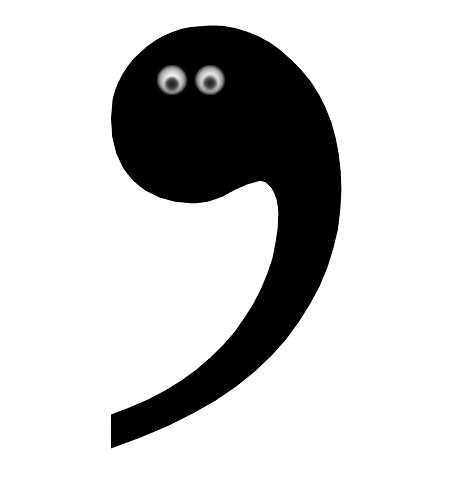
We are learning to use apostrophes in the correct place.
|
Our prior knowledge:
- Used in shortened words = taking out a letter and putting in apostrophes
- Usually used before an ‘s’
Our Key Questions…
- What are the main rules for apostrophes?
- Where are apostrophes used?
- Why do we use apostrophes?
- When do we use apostrophes?
The Task:
Use our search skills to find and read about the rules regarding apostrophes.
Decide on the important rules and write into our own words. Add these rules to our personal SPLT document.
Create a (short!!!) Google presentation for the rest of the class that teaches them about the apostrophe rules.
A great website we have found is...BBC Skillwise Bitesize
A great website we have found is...BBC Skillwise Bitesize
Sunday, 30 March 2014
More P.E.E. writing - Abbie's
I am learning to P.E.E. in my writing - have a main point/topic sentence as the first sentence, then I elaborate.
Tupare gardens is a public garden in New Plymouth. Tupare has a river at the end of the gardens. There is a swimming hole in one part of it. The swimming hole is really deep. The river has a very fast current and there are some steps to get down to the river. The river is called the Waiwhakaiho. There are eels in the river that come out at night. The eels normally live at the end of the swimming hole by the bank. Tupare gardens are recommended by local people. If you like to look at gardens, this is the place to go.
If you are curious about Tupare gardens go to this website http://www.trc.govt.nz/tupare-home/
Written by Abbie
Thursday, 27 March 2014
I am learning to P.E.E. in my writing - have a main point/topic sentence as the first sentence, then I elaborate.
The Cascade Cliff
The Cascade Cliff

Here you will explore of the amazing history the Cascade Cliff at Tupare Gardens. The Cascade Cliff took 4 winters to build and some rocks from the Waiwhakaiho River made the stone in the Waterfall. The Cascade Cliff was named after a good friend of Russell Matthews his name was Cliff. The waterfall was made in winter because Russell Matthews had to build roads in the summer. The water flows when the tide of the river is high but when the tide of the river is low then it doesn’t flow as much water. The water from the river is the water from the Cascade Cliff so the Cascade Cliff’s water comes from the Waiwhakaiho river. The water flows underground to get to the Cascade Cliff.
By Eliala
Cascade Cliffs
Cascade Cliffs is a small waterfall in Tupare Gardens. It was built in the winter because Russell Mathews had work in the summer. Cascade Cliffs took 4 winters to build. It got its name from Russell Mathews good friend who thought that Cascade Cliffs was a good name for a waterfall.
The rocks from the waterfall came from the Waiwhakaiho River. There are rings of rocks with water in them what makes the Cascade Cliffs.
Here is a web sight to see the Cascade Cliffs:
By Emily
SPLT - Singular into Plurals
I am learning how to make words into plurals.
Plural = words that mean 2 or more of something
Singular words = there is only one!
Singular = goose
Plural = geese
S = mouse
P=mices? no it’s mice
S=fish
P=fish
Can you think of any others?...
Questions…
- What rules are there about using plurals to spell words?
- Do we need to know all the plural spelling rules or just a few?
- What are the most important rules?
Tuesday, 25 March 2014
PEE when I write (Point, Elaborate, Elaborate)
Today one of our writing groups was working on using P.E.E. in their writing. Here is what we discussed and our thinking around it.
I am learning to P.E.E. in my writing - have a main point/topic sentence as the first sentence, then I elaborate.
Audience: Teacher, People that have never been to Tupare
Task: Write a short magazine article about one special feature in Tupare
P.E.E.
P = Point (main point/topic sentence)
E = Elaboration (explain the main point a bit)
E = Elaboration (explain the main point a bit more)
Example:
At Frankley School we have a wonderful bush area at the back of our school. A couple of years ago we put possum traps up there. The bush has heaps of native birds and plants. In our bush we have a bush track.
Non Fiction Writing/Factual writing about a topic = true, real
|
Fiction Writing = made up
|
We don't usually use personal pronoun words like we, I, me, my
True facts
|
imaginative language
|
Writing Sentences
In writing today, one of our groups were discussing what a sentence is. We need to learn this because we are not at the level of writing proper sentences that make sense yet. Here are our ideas...
Sentences need to make sense.
"I am learning to use sentences".
What we know about sentences…
What we know about sentences…
Sentences start with a capital letter and end with a full stop.
Sentences have one idea in them.
Sentences have to have at least 3 words in them.
Sentences need to make sense.
SPLT Learning - Syllables
Today our SPLT group looked at improving our spelling through the use of syllables. Here is the what we recorded as our thinking and learning:
com/pre/hen/tion
I am learning to break words into syllables.
PK
- 2 words joined together? e.g. someone, into
- Is it a word and you break the word into small words?
We need to know…
- What does syllable mean.
- How do we use syllables
- What are syllables
- When do we use syllables
- Where do we use syllables
Keywords
- Syllables, learning
What is a syllable?
- A syllable is a part of a word/chunk in a word that makes a sound
elephant el/e/phant = 3
syllable syll/a/ble = 3
vegetable veg/e/ta/ble = 4
Anderson And/er/son
island is/land
en/cy/clo/pe/d/ia
pop/trop/i/ca
How does knowing about syllables help us to spell words?
- When you dont know how to spell a word, sound it out aloud, clap the syllables, write down the syllables you can hear
e.g pro/spec/tive
com/pre/hen/tion
Thursday's new learning:
Every syllable must have at least one vowel!
Eth/an
Dan/iel
Subscribe to:
Posts (Atom)